Exploring What’s Next in C# and .NET
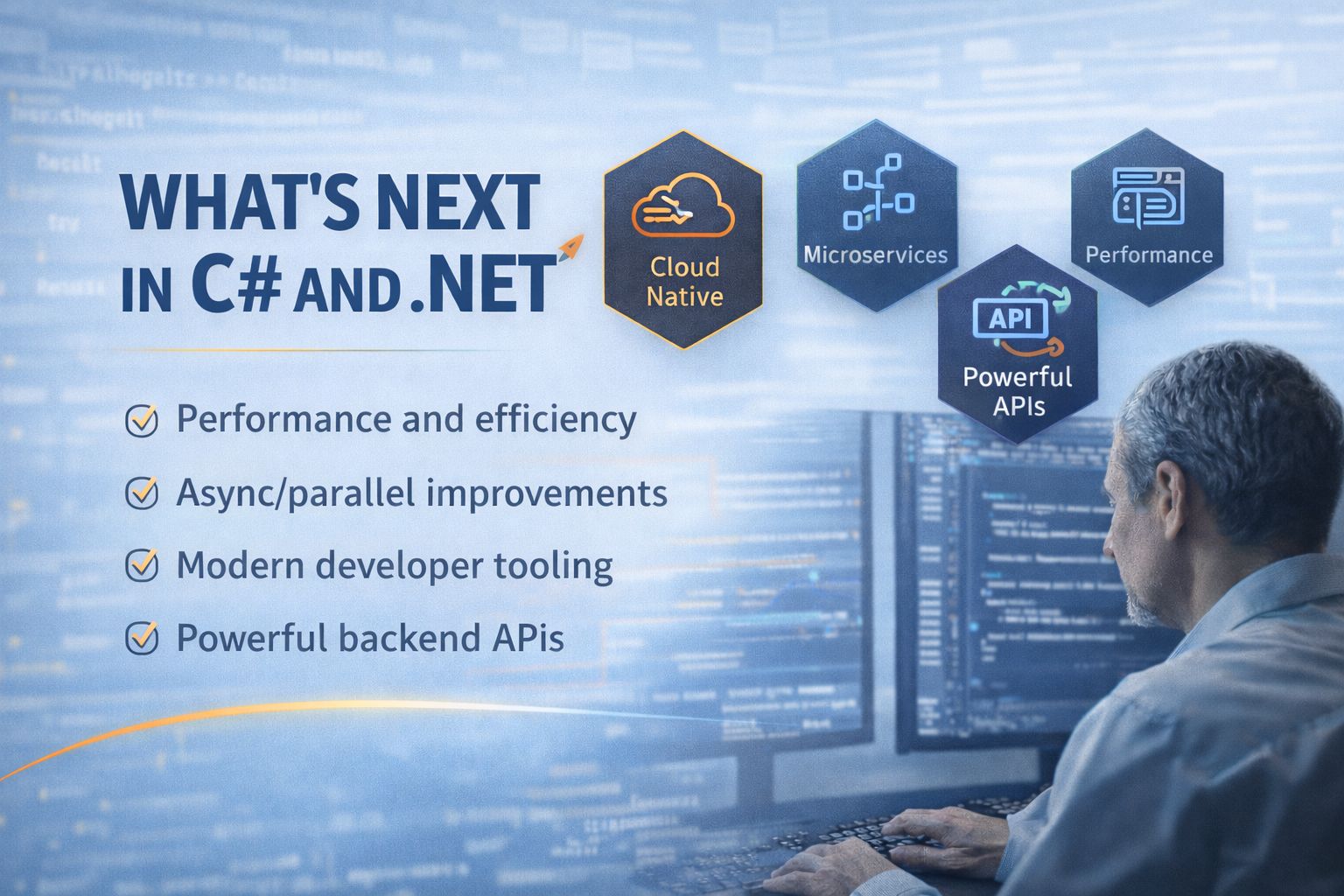
🚀 Exploring What’s Next in C# and .NET
Staying current as a software engineer means continuously learning and adapting — especially with how fast the .NET ecosystem evolves.
Recently, I’ve been exploring upcoming trends and improvements expected in future versions like C# 15 / .NET 11, including:
🔹 Continued improvements in performance and memory efficiency
🔹 Enhancements to async/parallel programming models
🔹 Better developer productivity with cleaner syntax and tooling
🔹 Deeper cloud-native and microservices support
🔹 More powerful APIs for building scalable backend systems
💡 What stands out to me:
Modern .NET is not just about writing code —
It’s about building high-performance, scalable, and maintainable systems.
With my background in enterprise systems (ERP, healthcare, payment platforms), I’m particularly interested in how these advancements help:
✔ Improve system performance
✔ Simplify complex architectures
✔ Enable smoother modernization of legacy systems
Bridging experience from legacy systems to modern .NET architecture is where I see the most impact.
I’m continuing to explore and apply these concepts in real-world scenarios.
👉 Always open to discussing .NET, system design, and backend architecture.
#CSharp #DotNet #SoftwareEngineering #BackendDevelopment #SystemDesign #TechLearning #CloudComputing #Delphi